

As a seasoned sand belt supplier, I've encountered numerous inquiries about the disparities between sand belts and sanding attachments. This blog post aims to shed light on these differences, offering valuable insights for those in the market for sanding solutions.
Understanding Sand Belts
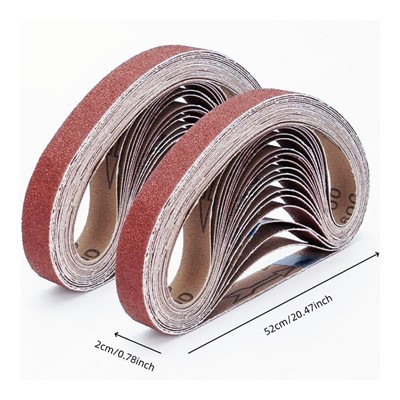
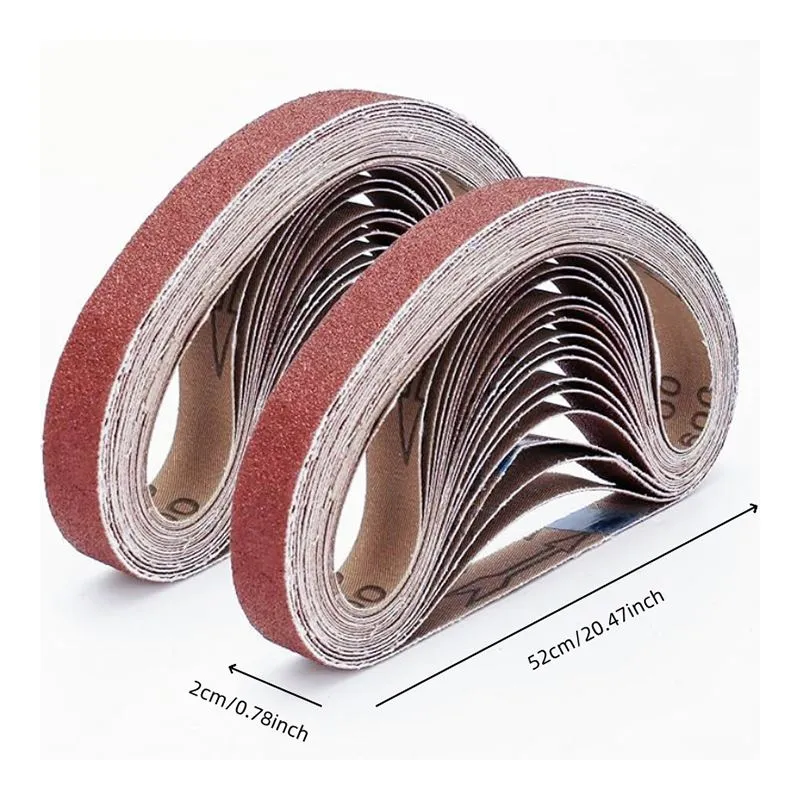
Sand belts are continuous loops of abrasive material designed to be used on belt sanders. These tools are a staple in woodworking, metalworking, and various industrial applications. They come in a wide range of sizes, grits, and abrasive materials to suit different tasks.
Types of Sand Belts
- Coated Sanding Belts: These belts are coated with abrasive grains bonded to a flexible backing material. They are versatile and can be used for a variety of applications, from rough sanding to fine finishing. Coated Sanding Belts are available in different grits, with lower grits (e.g., 40 - 60) used for heavy material removal and higher grits (e.g., 180 - 220) for fine sanding and polishing.
- High Grit Sanding Belts: High grit sanding belts, typically with grits above 220, are used for achieving a smooth, polished finish. They are ideal for applications where a high - quality surface is required, such as in the production of furniture or automotive parts. High Grit Sanding Belts are often made with finer abrasive grains and a more flexible backing to conform to irregular surfaces.
- Sanding Belts for Steel: When working with steel, specialized sanding belts are needed. These belts are designed to withstand the hardness of steel and provide efficient material removal. Sanding Belts for Steel usually feature abrasive materials like aluminum oxide or silicon carbide, which are known for their durability and cutting ability on metal surfaces.
Advantages of Sand Belts
- High Material Removal Rate: Sand belts can remove large amounts of material quickly, making them ideal for rough shaping and initial sanding operations.
- Consistent Performance: The continuous loop design of sand belts ensures a consistent sanding surface, resulting in uniform results across the workpiece.
- Versatility: With a wide range of grits and abrasive materials available, sand belts can be used on various materials, including wood, metal, plastic, and composites.
Exploring Sanding Attachments
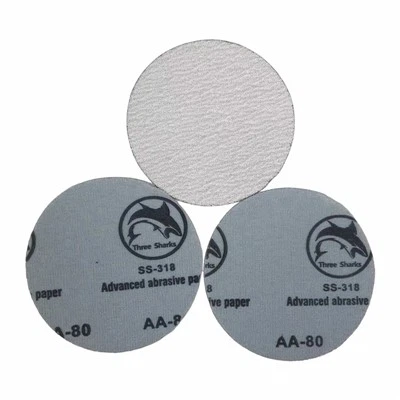
Sanding attachments, on the other hand, are accessories that can be added to existing power tools to provide sanding functionality. They come in different forms, such as sanding pads, discs, and drums, and can be attached to tools like drills, angle grinders, or rotary tools.
Types of Sanding Attachments
- Sanding Pads: These are flat or contoured pads that can be attached to a power tool using a hook - and - loop system or adhesive. Sanding pads are available in different sizes and grits and are suitable for sanding flat or curved surfaces.
- Sanding Discs: Sanding discs are circular abrasive pads that are typically used with angle grinders or disc sanders. They are available in various diameters and grits and can be used for both rough and fine sanding operations.
- Sanding Drums: Sanding drums are cylindrical abrasive attachments that can be used with drills or rotary tools. They are ideal for sanding inside holes, tubes, or other cylindrical surfaces.
Advantages of Sanding Attachments
- Portability and Convenience: Sanding attachments can be easily attached to existing power tools, making them a portable and convenient sanding solution. They are especially useful for on - site or small - scale sanding tasks.
- Accessibility: Sanding attachments can reach tight spaces and corners that may be difficult to access with a belt sander. This makes them suitable for detailed sanding work.
- Cost - Effective: In many cases, sanding attachments are more cost - effective than purchasing a dedicated belt sander. They allow users to add sanding functionality to their existing tool collection without a significant investment.
Key Differences between Sand Belts and Sanding Attachments
1. Sanding Speed and Efficiency
Sand belts generally offer a higher sanding speed and greater efficiency compared to sanding attachments. The continuous loop design of sand belts allows for a larger contact area with the workpiece, enabling faster material removal. In contrast, sanding attachments, especially those with smaller contact areas like sanding discs or pads, may require more passes to achieve the same level of material removal.
2. Surface Finish
When it comes to achieving a high - quality surface finish, sand belts are often the preferred choice. The consistent movement of the belt across the workpiece results in a more uniform finish. Sanding attachments, while capable of producing a good surface finish, may leave behind slight scratches or unevenness due to the smaller contact area and the nature of the tool's movement.

3. Application Range
Sand belts are better suited for large - scale sanding operations, such as sanding large wooden panels, metal sheets, or shaping large workpieces. They are also commonly used in industrial settings where high - volume material removal is required. Sanding attachments, on the other hand, are more suitable for small - scale and detailed sanding tasks, such as sanding the edges of a small wooden box or sanding inside a narrow tube.
4. Tool Compatibility
Sand belts require a dedicated belt sander to operate, while sanding attachments can be used with a variety of power tools, including drills, angle grinders, and rotary tools. This makes sanding attachments more versatile in terms of tool compatibility, as they can be used with tools that many users already own.
Choosing the Right Sanding Solution
When deciding between a sand belt and a sanding attachment, several factors need to be considered:
- Task Requirements: If you need to remove a large amount of material quickly or sand large surfaces, a sand belt and a belt sander may be the best choice. For small - scale, detailed work, a sanding attachment may be more suitable.
- Budget: Sanding attachments are generally more cost - effective, especially if you already have the necessary power tools. However, if you frequently perform large - scale sanding tasks, investing in a belt sander and sand belts may be a better long - term solution.
- Surface Finish: If a high - quality surface finish is essential, sand belts are likely to provide better results. However, with proper technique and the right grit of sanding attachment, a good surface finish can also be achieved.
Conclusion
In conclusion, both sand belts and sanding attachments have their own unique advantages and are suitable for different sanding applications. As a sand belt supplier, I understand the importance of choosing the right sanding solution for your needs. Whether you opt for the high - speed material removal of sand belts or the portability and convenience of sanding attachments, I can provide you with high - quality products to meet your requirements.
If you're interested in learning more about our sand belts or have any questions regarding your sanding needs, I encourage you to reach out to me for a detailed discussion. We can work together to find the perfect sanding solution for your projects.
References
- Woodworking Machinery and Supplies Handbook
- Metalworking Technology Manual
- Abrasive Materials and Their Applications Research Papers