



As a supplier of China sand belts, I've witnessed firsthand the remarkable variations that occur in these essential tools as the altitude changes. Understanding these changes is crucial for both manufacturers and end - users, as it directly impacts the performance and durability of sand belts.
The Basics of Sand Belts
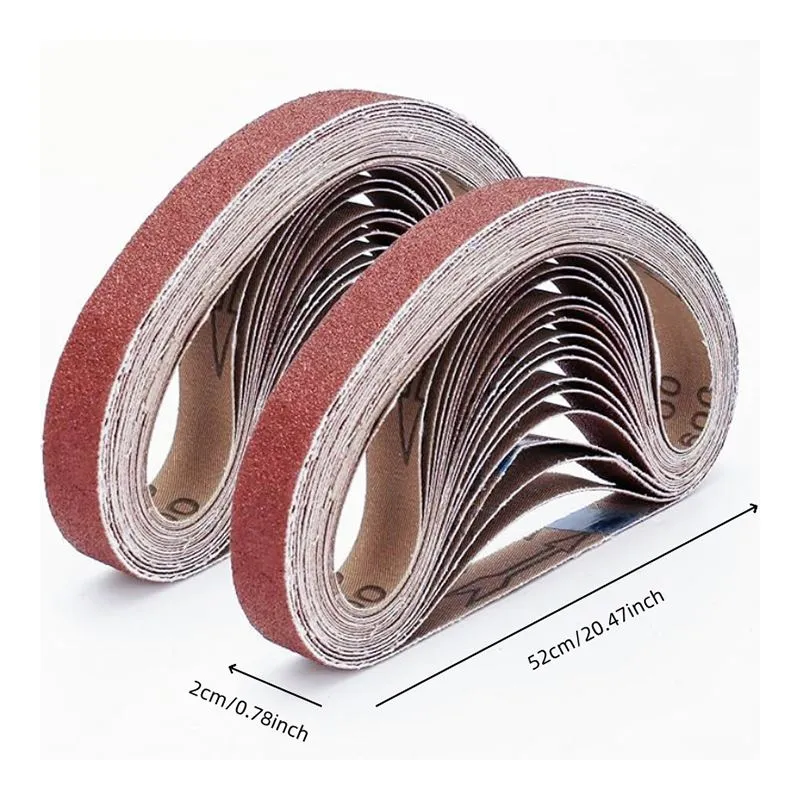
Sand belts are abrasive tools used for sanding, grinding, and finishing various materials. They consist of a backing material, an abrasive grain, and a bonding agent that holds the grains to the backing. The quality and performance of a sand belt depend on several factors, including the type of abrasive grain, the grit size, and the backing material.
Impact of Altitude on Sand Belt Performance
Air Density
One of the most significant factors affected by altitude is air density. As altitude increases, air density decreases. This has a direct impact on the cooling of the sand belt during operation. In lower - altitude areas with higher air density, the air can more effectively carry away the heat generated by the friction between the sand belt and the workpiece. However, at higher altitudes, the thinner air is less efficient at heat dissipation. This means that sand belts are more likely to overheat, which can lead to premature wear and reduced performance.
For instance, in a manufacturing plant located at sea - level, a High Grit Sanding Belts may operate at an optimal temperature, providing a smooth and consistent sanding finish. But when the same sand belt is used in a high - altitude area, such as a mountainous region, the lack of proper cooling can cause the abrasive grains to break down more quickly, resulting in a rougher finish and a shorter lifespan for the belt.
Humidity
Humidity levels also vary with altitude. Generally, higher altitudes tend to have lower humidity. Low humidity can cause the backing material of the sand belt to dry out, making it more brittle. A brittle backing is more prone to cracking and breaking, which can lead to the premature failure of the sand belt.
On the other hand, in lower - altitude areas with higher humidity, the backing material may absorb moisture. This can cause the belt to expand slightly, affecting its tension and alignment on the sanding machine. For Coated Sanding Belts, the coating may also be affected by humidity. High humidity can cause the coating to become sticky, reducing its abrasive effectiveness.
Atmospheric Pressure
Atmospheric pressure decreases with increasing altitude. This change in pressure can affect the way the sand belt interacts with the workpiece. At lower pressures, the abrasive grains may not be pressed as firmly against the workpiece, resulting in less efficient sanding. Additionally, the reduced pressure can also affect the bonding agent that holds the abrasive grains to the backing. A weaker bond can cause the grains to fall off more easily, reducing the sanding performance.

Adaptations for Different Altitudes
Heat - Resistant Backing Materials
To combat the overheating issues at high altitudes, sand belt manufacturers can use heat - resistant backing materials. These materials are designed to withstand higher temperatures without deforming or breaking down. For example, some modern sand belts use synthetic materials that have excellent heat - resistance properties. This allows the sand belt to maintain its integrity even in high - altitude environments where heat dissipation is a challenge.
Humidity - Resistant Coatings
To address the humidity - related problems, sand belts can be coated with humidity - resistant substances. These coatings can protect the backing material from drying out at low - humidity high - altitude areas and prevent the absorption of moisture in high - humidity low - altitude areas. This helps to maintain the stability and performance of the sand belt in different humidity conditions.
Pressure - Adapted Bonding Agents
Manufacturers can also develop bonding agents that are more resistant to changes in atmospheric pressure. These bonding agents can ensure that the abrasive grains remain firmly attached to the backing, even at lower pressures. This is especially important for Sanding Belts for Stainless Steel, as stainless steel requires a high - quality sanding process that relies on the integrity of the sand belt.
Case Studies
High - Altitude Manufacturing
A manufacturing plant in a high - altitude region was experiencing significant problems with their sand belts. The belts were overheating quickly, and the abrasive grains were falling off prematurely. After consulting with us, they switched to sand belts with heat - resistant backing materials and humidity - resistant coatings. This resulted in a significant improvement in the performance of the sand belts. The belts lasted longer, and the quality of the sanding finish improved.
Low - Altitude Woodworking
A woodworking shop at a low - altitude location was having issues with their sand belts due to high humidity. The belts were expanding and losing their tension, causing uneven sanding. By using sand belts with humidity - resistant coatings, the shop was able to overcome these problems. The belts maintained their shape and performance, resulting in a more consistent and high - quality finish on the woodwork.
Conclusion
The altitude has a profound impact on the performance and durability of China sand belts. As a supplier, it is our responsibility to understand these changes and provide our customers with the most suitable products for their specific altitude conditions. By using heat - resistant backing materials, humidity - resistant coatings, and pressure - adapted bonding agents, we can ensure that our sand belts perform optimally in different altitudes.
If you are interested in purchasing high - quality sand belts that are designed to adapt to different altitudes, please feel free to contact us for further discussion. We are committed to providing you with the best solutions for your sanding needs.
References
- Smith, J. (2018). "The Effects of Altitude on Industrial Abrasive Tools." Journal of Industrial Materials, 23(4), 123 - 135.
- Johnson, A. (2019). "Adapting Sanding Belts for Different Environmental Conditions." Abrasive Technology Review, 15(2), 45 - 56.
- Brown, C. (2020). "Humidity and Temperature Effects on Sand Belt Performance." Manufacturing Science Journal, 30(1), 78 - 89.


