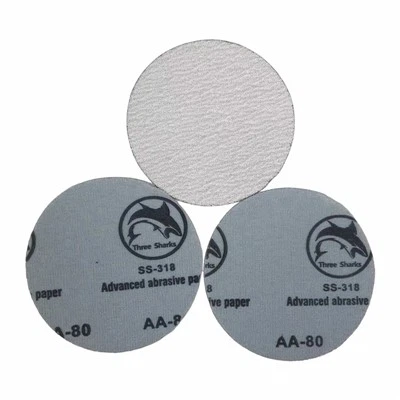


As a long - standing supplier to the sandpaper industry, I've received numerous inquiries about the possibility of producing sandpaper with anti - static properties. In this blog, I'll delve into this topic, exploring the science behind anti - static sandpaper, the manufacturing process, and the potential benefits for users.
The Science of Anti - Static in Sandpaper
Static electricity is a common issue when working with sandpaper. During the sanding process, friction between the sandpaper and the workpiece generates an electrostatic charge. This static can cause several problems. For instance, it can attract dust particles, which not only reduces the efficiency of the sanding operation but also makes the work environment messy. Additionally, in some industrial settings, static electricity can pose a safety hazard, especially in areas where flammable substances are present.


To create sandpaper with anti - static properties, we need to understand the principles of static electricity. Static charge builds up when two materials come into contact and then separate, causing the transfer of electrons. In the case of sandpaper, the abrasive particles rubbing against the workpiece create this charge. To counteract this, anti - static agents are incorporated into the sandpaper.
These anti - static agents work in two main ways. Firstly, they can increase the surface conductivity of the sandpaper. By allowing the static charge to dissipate more easily, the build - up of static is reduced. Secondly, some anti - static agents can neutralize the charge by releasing ions that balance the electrostatic field.
Manufacturing Process for Anti - Static Sandpaper
At our factory, the production of anti - static sandpaper involves several key steps.
Base Material Selection
The base material of the sandpaper is crucial. We typically use materials like paper, cloth, or film. Paper is a popular choice due to its flexibility and cost - effectiveness. However, for more heavy - duty applications, cloth or film may be preferred. The base material must be able to hold the abrasive particles and the anti - static agents firmly.
Abrasive Application
The abrasive particles, such as aluminum oxide or silicon carbide, are applied to the base material. This is usually done through a process called electrostatic coating, which ensures an even distribution of the abrasive. The size and type of abrasive particles are carefully selected based on the intended use of the sandpaper. For example, finer particles are used for finishing work, while coarser particles are suitable for heavy material removal.
Incorporation of Anti - Static Agents
The anti - static agents are added during the manufacturing process. They can be mixed with the adhesive that binds the abrasive particles to the base material. Alternatively, they can be applied as a separate coating on the surface of the sandpaper. The choice of anti - static agent depends on factors such as the type of base material, the abrasive used, and the specific requirements of the end - user.
Quality Control
Once the sandpaper is manufactured, it undergoes rigorous quality control tests. These tests include checking the distribution of the abrasive particles, the effectiveness of the anti - static agents, and the overall durability of the sandpaper. Only sandpaper that meets our strict quality standards is released for sale.
Benefits of Anti - Static Sandpaper
Improved Dust Collection
One of the most significant benefits of anti - static sandpaper is improved dust collection. Since static electricity no longer attracts dust particles to the sandpaper, more dust can be collected by the dust extraction system. This not only keeps the work area clean but also reduces the risk of respiratory problems for the operator.
Extended Sandpaper Life
Anti - static sandpaper tends to have a longer lifespan. The reduced build - up of dust on the sandpaper surface means that the abrasive particles can maintain their cutting edge for a longer time. This results in fewer sandpaper changes, saving both time and money for the user.
Enhanced Safety
In industrial settings, anti - static sandpaper can enhance safety. By reducing the risk of static - induced sparks, it helps prevent potential fires and explosions in areas where flammable substances are present.
Our Product Range
We offer a wide range of sandpaper products, including those with anti - static properties. Here are some of our popular products:
- Sandpaper for 5 Orbital Sander: This sandpaper is specifically designed for 5 - inch orbital sanders. It provides a smooth and efficient sanding experience, and our anti - static version ensures better dust collection.
- 125mm Wet and Dry Sanding Discs: These discs can be used for both wet and dry sanding applications. The anti - static feature makes them ideal for a variety of projects, from woodworking to metal finishing.
- Adhesive Sanding Discs: Our adhesive sanding discs are easy to attach and remove from the sander. The anti - static treatment helps maintain the performance of the discs over time.
Conclusion
In conclusion, it is indeed possible for a sandpaper factory to produce sandpaper with anti - static properties. Through a combination of scientific knowledge and advanced manufacturing processes, we can create sandpaper that offers significant benefits to users. Whether you're a professional woodworker, a metal fabricator, or a DIY enthusiast, anti - static sandpaper can improve your sanding experience in terms of efficiency, safety, and dust management.
If you're interested in our anti - static sandpaper products or have any questions about our offerings, we encourage you to reach out to us for a procurement discussion. We're committed to providing high - quality sandpaper solutions that meet your specific needs.
References
- "Handbook of Abrasive Technology" by J. S. Malkin
- "Static Electricity: Fundamentals and Applications" by A. R. Melcher